
/vibemarketing — The Moment Marketing Broke (and Rebuilt Itself)
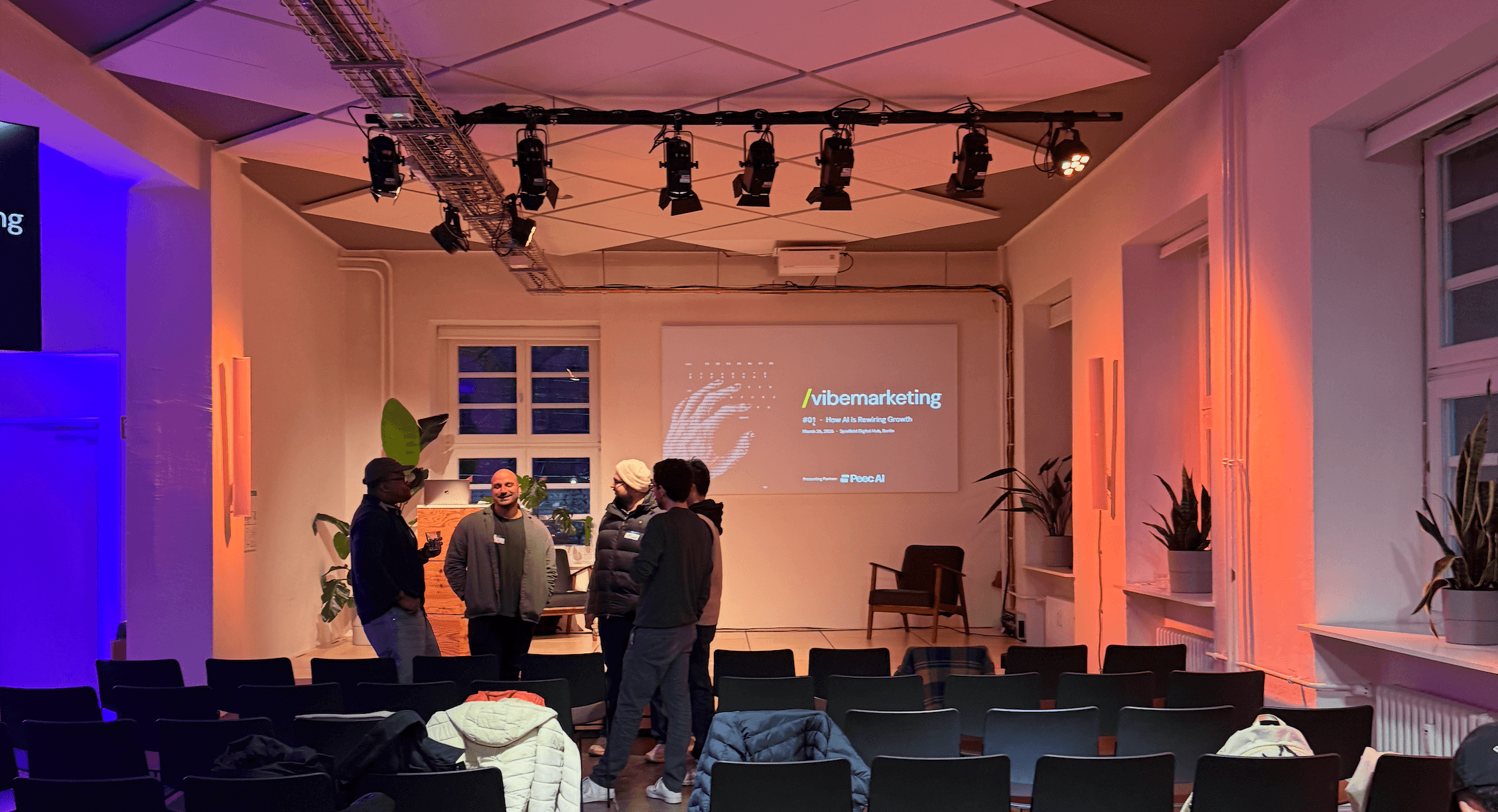
AI is reshaping marketing, shifting from clicks to answers. Key takeaways from /vibemarketing and what it means for growth in an AI-first world
Today I attended an event that didn’t feel like a typical marketing meetup.
No polished growth decks.
No “10 hacks to scale your CAC” energy.
No recycled SEO playbooks.
Instead, it felt like being in a room where people are actively trying to figure out what marketing even means right now — in a world where AI is not just a tool, but a new layer between users and the internet.
And that’s what made it interesting.
Because if you zoom out, something fundamental is happening:
The way people discover products, brands, and information is shifting — not gradually, but structurally.
For the last 15+ years, we’ve optimized everything around:
- search rankings
- traffic funnels
- performance marketing
- attribution
But that entire system was built on one assumption:
The user clicks.
That assumption is starting to break.
The fact that reframes everything
One insight from the evening really stuck with me:
ChatGPT already replaces ~10–12% of Google searches
…while sending ~190x less traffic to websites
…but with up to 23x higher conversion intent
Let that sink in for a second.
We’re entering a world where:
- distribution decreases
- but intent quality increases massively
Users don’t browse anymore.
They ask — and expect a final answer.
That’s not SEO 2.0.
That’s a completely different game.
1. AI Search = The New Discovery Layer
The biggest mindset shift of the night:
You are no longer optimizing for ranking.
You are optimizing for being selected by an AI.
This changes everything.
Because LLMs don’t behave like search engines:
- They don’t rank — they synthesize
- They don’t list — they decide
- They don’t send traffic — they resolve intent
Which means:
- Generic content → ignored
- Commodity SEO pages → invisible
- “Top 10” articles → often useless
Instead, AI systems pull from:
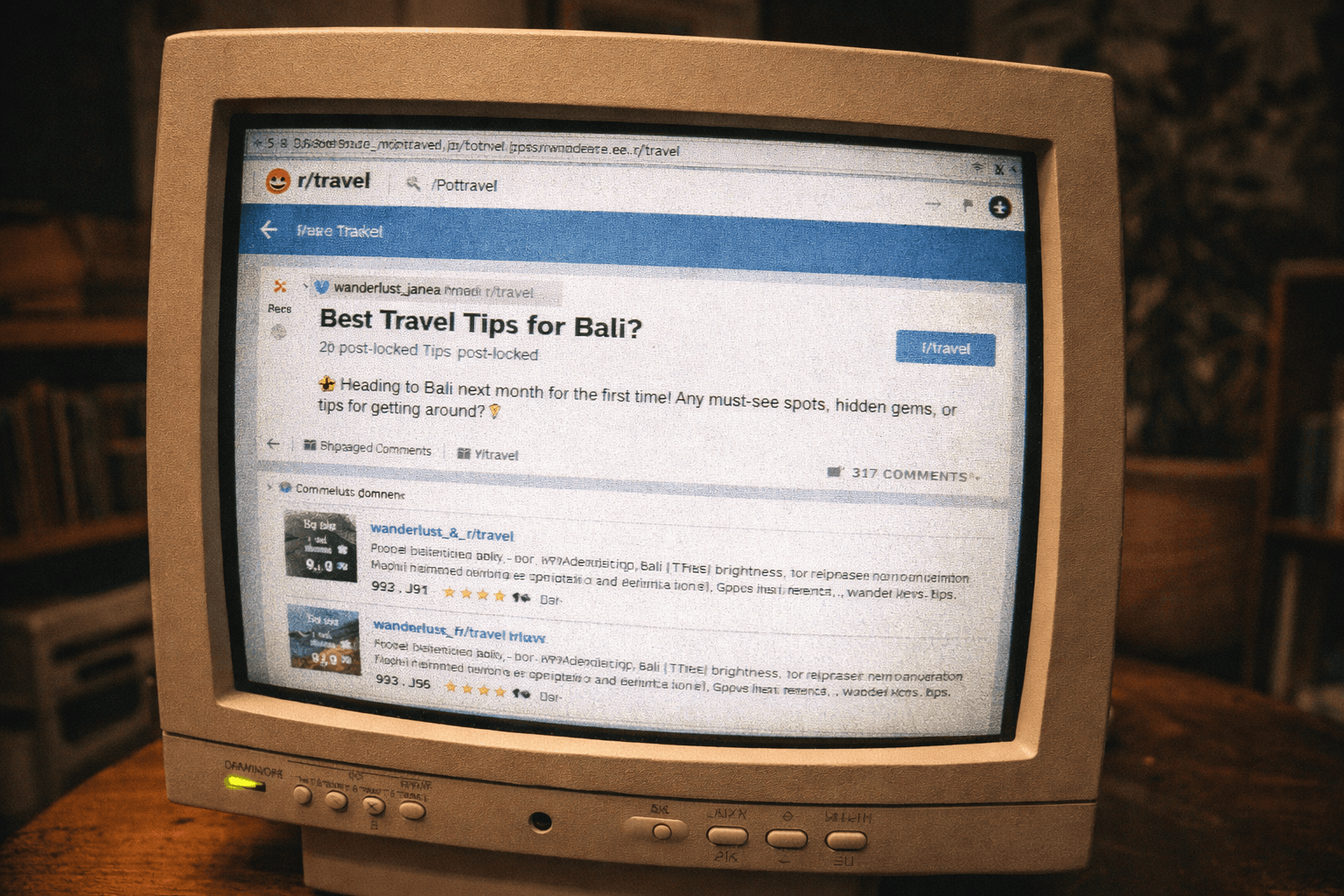
- Reddit (real opinions, high signal)
- YouTube (context-rich, intent-heavy content)
- fresh, continuously updated sources
And that leads to a very different growth strategy.
Tactical takeaways
- Refresh content regularly (even updating publish dates matters)
- Translate content to English (LLMs normalize heavily into English)
- Write descriptions like summaries (LLMs scrape and compress them)
- Avoid “AI slop” — content still needs real engagement signals
2. The Hidden Layer: Systems That Remember
One of the most interesting statement from the evening:
AI is useless long-term if it doesn’t remember.
Most setups in marketing teams today are:
- stateless
- prompt-based
- one-off
You ask something → you get an output → it’s gone. Your output will not improve with such a system.
But the real leverage comes from:
compound systems that learn over time
That triggered a lot of thoughts for me — especially in the context of building Planaway.com.
What if marketing systems could:
- store brand voice over time
- track which content actually performs
- log agent decisions and reasoning
- feed outcomes back into future generation
Basically:
Treat your marketing not as campaigns — but as a learning system
What this unlocks
- Your AI doesn’t just generate content → it improves with every iteration
- Your brand voice becomes:
- → structured
- → trainable
- → scalable
- Your marketing becomes:
- → a feedback loop
- → not a one-off effort
3. What This Means for Me
This event didn’t just give me ideas — it shifted how I think about growth entirely.
Old mindset
- build landing pages
- run ads
- optimize SEO
- drive traffic
New mindset
- build systems that AI trusts
- own narratives across platforms
- create memory loops
- automate distribution via agents
Concrete ideas I’m taking with me
- Build a content memory system (vector DB + performance feedback)
- Turn Planaway into an AI-native distribution engine
- Double down on Reddit / YouTube / TikTok as discovery layers
- Think less about “traffic” → more about being the answer
So What?
We’re entering a phase where:
You don’t win by being the best website.
You win by being the best source for AI to trust and reference.
Most companies are still optimizing for Google.
But the real opportunity is one layer above it.
Optimize for the system that decides what the user sees.
And that system may soon no longer be a search engine.
Share your thoughts with me! They will not be published.
If you enjoyed this post, please consider subscribing to my newsletter to get notified about new posts and other updates.

No Spam — just ideas, insights, and maybe a rare bug turned life lesson.


